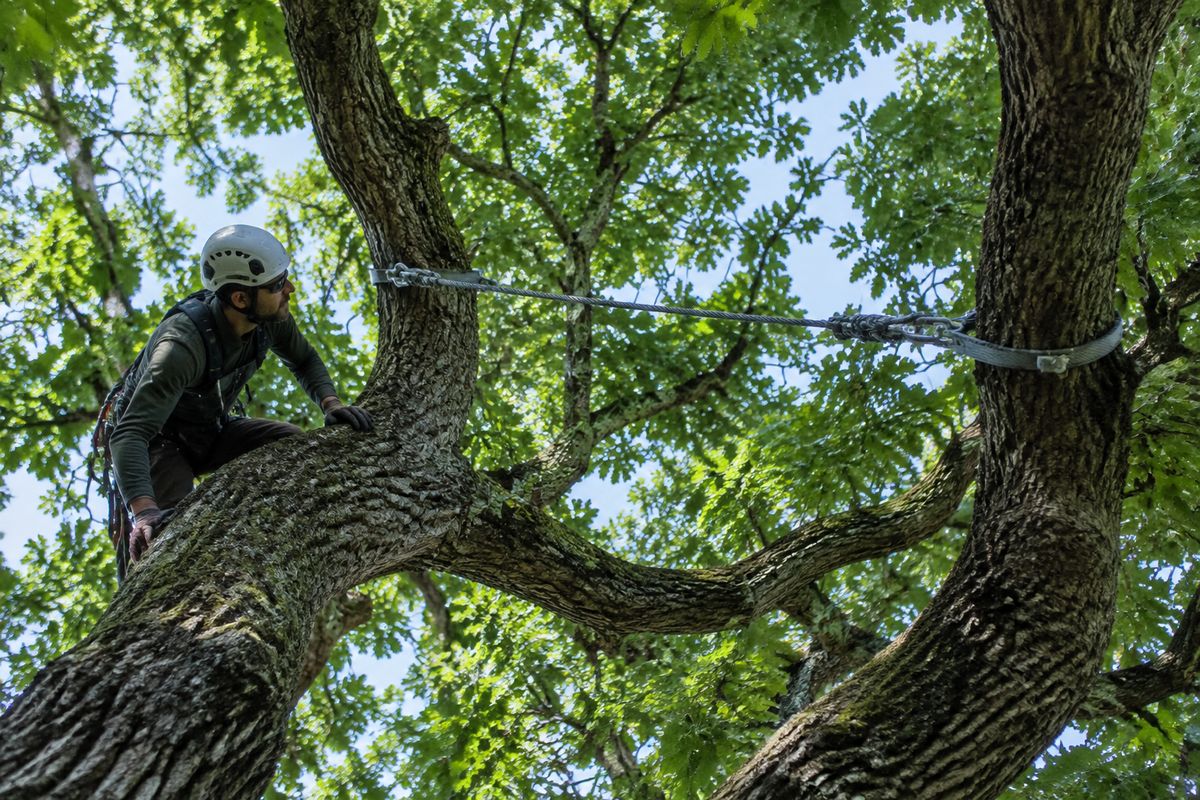
Some of the best trees in Hyde Park, Mt. Lookout and Indian Hill have a structural weak spot: a V-shaped fork, a long heavy limb, or a trunk that split into two leaders decades ago. Cabling and bracing can extend the life of these trees when removal isn't the only option.
Cabling vs. Bracing
- Cabling connects major limbs high in the crown, typically about two-thirds of the way up, with high-strength steel or synthetic cable. It limits movement without holding the limbs rigid.
- Bracing uses threaded steel rods through the trunk or limbs, usually lower down, to hold a cracked or split union together.
Many trees get both, installed following ANSI A300 standards for supplemental support systems.
Trees That Benefit
- Co-dominant trunks with a tight V-shaped union, common in silver maples and pin oaks.
- Long, heavy horizontal limbs over a roof, driveway or patio.
- A tree with an old crack that a certified arborist judges sound enough to keep.
- Historic or specimen trees where removal would hurt the property's value.
When Cabling Isn't Enough
Cabling does not fix decay or a tree that is dying. If the trunk has major rot, the roots are compromised, or the tree is leaning more each year, removal is usually safer. An honest assessment should tell you which side of that line your tree is on.
Cost and Upkeep
Compare what is included in each written quote: access, cutting, hauling, cleanup and any separate stump work.
Cables should be inspected every 1 to 2 years and adjusted as the tree grows. Light crown thinning is often done at the same time to reduce the load.
Call (833) 423-0578 to have a tree assessed for cabling anywhere in Greater Cincinnati.